How Solar Energy Is Helping Educate 2,500+ Rural Children Every Year
When the Sun Powers More Than Just Buildings
High in the hills of Himachal Pradesh, something remarkable happens every day.
As sunlight falls across the campuses of The Kalgidhar Society, it does more than generate electricity.
It helps educate children.
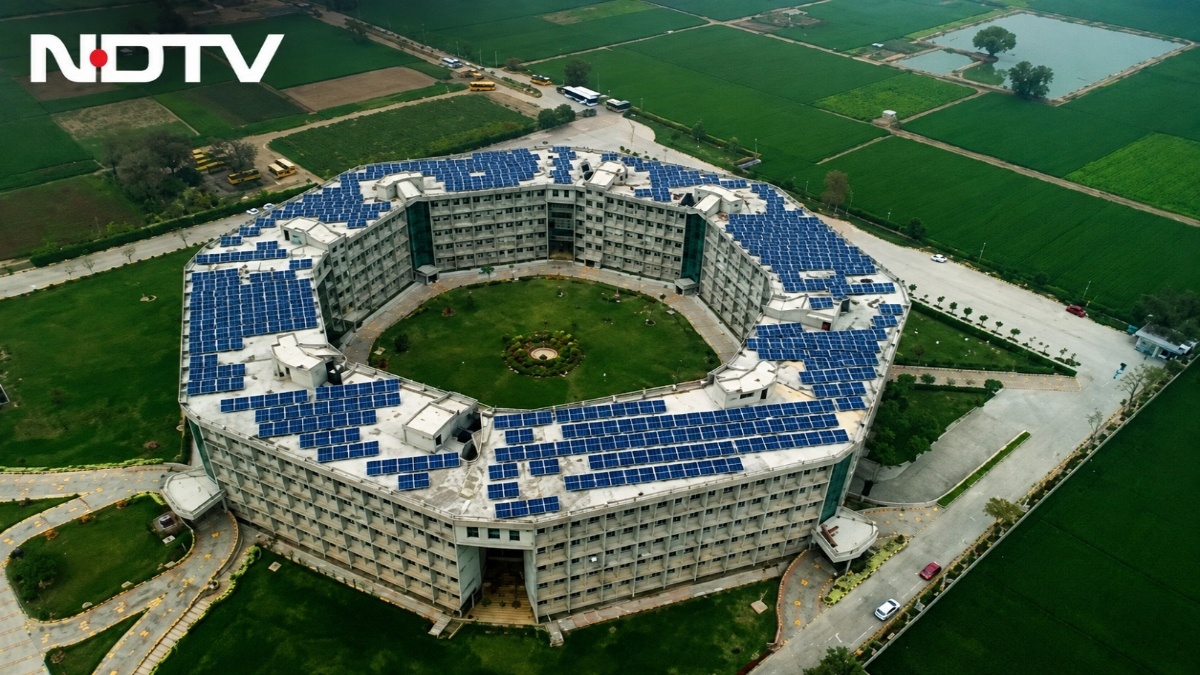
What began as an investment in renewable energy has become a powerful model for educational impact. Through a 4.4 MWp solar power initiative, The Kalgidhar Society generates clean energy, reduces operational costs, and redirects those savings toward the education of more than 2,500 underprivileged rural children every year.
It is a simple idea with extraordinary consequences:
Every rupee saved on electricity becomes an investment in a child's future.
As featured by NDTV, The Kalgidhar Society's solar-powered education model saves more than ₹4 crore annually and helps fund the education of over 2,500 underprivileged rural children every year.
The Solar Investment Behind the Mission
Providing quality education in rural India requires more than classrooms and teachers.
Schools need electricity, infrastructure, residential facilities, technology, and resources that support student learning.
Recognising this challenge, The Kalgidhar Society invested in a large-scale solar energy project across its educational institutions.
The result has been transformative.
Solar Impact at a Glance
MetricImpact
Total Solar Capacity4.4 MWp
Annual Energy Generated58 Lakh Units
LPG Cylinders Saved19,700 Per Year
Carbon Emissions Reduced1,14,400 MT
Annual Cost Savings₹4 Crore+
Children Supported2,500+ Every Year
As reported by NDTV, the solar initiative generates substantial annual savings that are redirected toward the Society's educational mission.
From Solar Panels to Scholarships
Most organisations view energy savings as a financial benefit.
The Kalgidhar Society views them as an educational opportunity.
Every year, more than ₹4 crore that would otherwise be spent on electricity can instead support students studying in Akal Academy schools and educational institutions.
The solar plant generates approximately 58 lakh units of clean energy annually.
That energy powers classrooms.
The savings support scholarships.
The scholarships keep children in school.
This is sustainability creating social impact in its purest form.
How 2,500+ Rural Children Benefit
Behind every statistic is a child.
Many of the students supported through these savings come from rural and economically challenged families where access to quality education remains difficult.
Some are first-generation learners.
Many come from communities where educational opportunities are limited.
Through Akal Academy schools and the Educate to Save initiative, these students receive:
- Quality CBSE education
- Value-based learning
- Residential support where needed
- Access to trained teachers
- Character development and life skills
- Opportunities for higher education
For these children, the solar savings are invisible.
They may never know that solar panels help subsidise their education.
What they do know is that they have a classroom, teachers, and an opportunity to build a better future.
Why This Model Matters for India
India continues to face significant challenges in ensuring equitable access to education, particularly in rural communities.
While schools may exist, many families struggle with the financial realities of keeping children enrolled.
The Kalgidhar Society's model demonstrates a powerful solution:
- Reduce operational costs through innovation.
- Redirect savings toward education.
- Combine institutional efficiency with community support.
- Scale impact sustainably.
Rather than relying solely on donations, the model creates a self-reinforcing system where renewable energy directly contributes to educational access.
It is a blueprint that combines environmental responsibility with social transformation.
The Kalgidhar Society's solar-powered education model demonstrates how renewable energy can directly support rural education in India.
From Himachal Pradesh to Punjab and other underserved regions, this model shows how sustainable infrastructure can create lasting educational opportunities for rural children across India.
Where Educate to Save Fits In
The solar initiative demonstrates what is possible when institutions think strategically.
But solar savings alone cannot meet the educational needs of every deserving child.
This is where Educate to Save plays a crucial role.
Educate to Save connects donors, philanthropists, NRIs, and CSR partners with children who need educational support.
The infrastructure already exists.
The schools are operating.
The teachers are trained.
The systems are in place.
Your contribution helps ensure that one more child gets the opportunity to learn.
How Corporates Can Multiply This Impact Through CSR?
The success of The Kalgidhar Society's solar initiative demonstrates how sustainability and education can work together to create lasting social impact.
While the existing 4.4 MWp solar infrastructure already helps educate more than 2,500 underprivileged children each year, there is significant potential to expand this model across additional educational institutions and rural communities.
This is where corporate CSR and ESG initiatives can play a transformative role.
Through CSRforChange.com , companies can partner with The Kalgidhar Society to support:
- Solar energy projects for schools and educational campuses
- Renewable energy infrastructure in rural institutions
- Educational sponsorship programmes for underprivileged children
- Sustainable development initiatives aligned with ESG goals
- Long-term community impact projects combining education and sustainability
By supporting solar infrastructure, corporates do more than reduce carbon emissions. They help create a self-sustaining model where operational savings are continuously redirected toward educating children from underserved communities.
Every solar panel installed today can help fund education for years to come.
For organisations seeking measurable CSR outcomes, environmental impact, and long-term social transformation, solar-powered education represents a unique opportunity to create value on multiple fronts.
Learn more about CSR partnership opportunities at CSRforChange.com and help scale a model where renewable energy powers both campuses and futures.
What Your Support Makes Possible
When you support Educate to Save, you help:
-
Sponsor a child's education in rural India
-
Reduce financial barriers for deserving students
-
Support quality CBSE schooling
-
Promote value-based education
-
Create opportunities for first-generation learners
-
Strengthen rural communities through education
Together, solar savings and community support create a model where more children can access quality education every year.
Sustainability Meets Social Impact
The story of The Kalgidhar Society's solar investment is not ultimately about energy.
It is about children.
It is about finding innovative ways to maximise every available resource for educational impact.
A solar panel generates electricity.
That electricity creates savings.
Those savings support education.
And education changes lives.
Few investments create a chain reaction quite like that.
Frequently Asked Questions
How does solar energy help educate children?
The Kalgidhar Society's 4.4 MWp solar project reduces electricity expenses by more than ₹4 crore annually. These savings are redirected toward educational programmes that support more than 2,500 rural children every year.
How many children benefit from the solar savings?
More than 2,500 underprivileged children benefit annually through educational support made possible by solar-generated savings.
What is Educate to Save?
Educate to Save is an initiative of The Kalgidhar Society that helps connect donors and sponsors with deserving children from rural and underserved communities.
Can I sponsor a child through Educate to Save?
Yes. Individuals, families, organisations, and CSR partners can sponsor children's education through Educate to Save.
Why is rural education important?
Rural education creates opportunities for children who may otherwise face financial and social barriers to learning. It helps reduce inequality and empowers future generations.
Is The Kalgidhar Society's solar initiative recognised nationally?
Yes. The initiative has been featured by NDTV for its innovative approach to combining renewable energy with educational impact.
How much does it cost to sponsor a child's education through Educate to Save?
EducatetoSave.com enables individuals, families, NRIs, and organisations to sponsor the education of deserving rural children. Sponsorship contributions help cover educational expenses, learning resources, and student welfare, ensuring that financial challenges do not prevent children from accessing quality education.
How can companies support solar-powered education through CSR?
Companies can partner with The Kalgidhar Society through CSRforChange.com to support solar energy infrastructure, educational sponsorships, rural school development, and sustainability projects that create measurable environmental and educational impact.
The Sun Helps. People Make It Possible.
Every day, solar panels help reduce costs.
Every year, those savings help educate thousands of children.
But there are still many deserving students waiting for an opportunity.
The sun is already doing its part.
You can do yours.
By supporting Educate to Save, you help ensure that more children receive the education they need to build brighter futures for themselves, their families, and their communities.
Sponsor a child today and become part of a model that transforms sunlight into opportunity, sustainability into scholarships, and savings into futures.