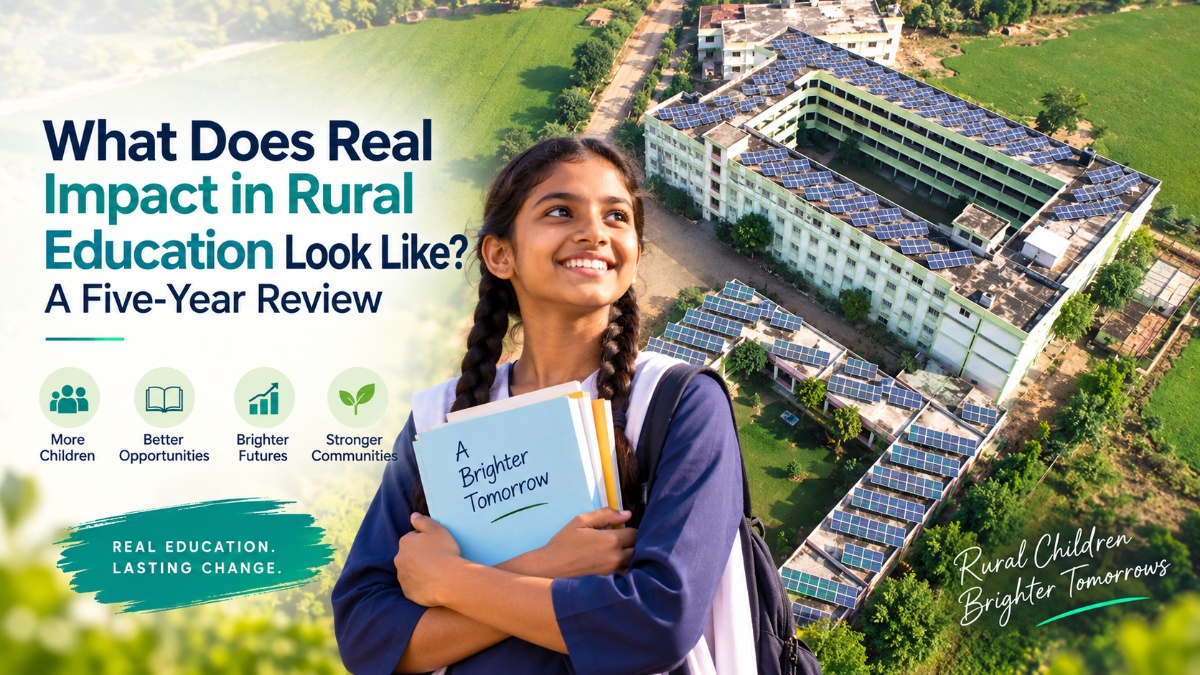
What Does Real Impact in Rural Education Look Like? A Five-Year Review
When we talk about education, it is easy to measure what is visible.
A child enrolled in school.
A classroom built in a village.
A scholarship awarded.
A student who completes an examination.
These are important milestones. But the deeper question is what happens over time.
Does a child remain in school when a family faces financial hardship? Does access to quality education improve academic opportunity? Can a rural student compete with peers from better-resourced communities? And can education create possibilities that extend beyond one generation?
These questions are at the heart of understanding the impact of rural education in India.
The Educate To Save Five-Year Impact Report (2021–2026) provides one set of data through which this question can be examined. The report documents the reach of Educate To Save, a child-sponsorship and rural-education initiative operated by The Kalgidhar Society, Baru Sahib.
What does rural education impact actually mean?
Rural education impact is not simply the number of children who attend school.
For a child from an economically disadvantaged family, access may be the first barrier. Staying in school can become the next. Academic support, a stable learning environment and the opportunity to continue into higher education can determine what happens afterwards.
This makes education impact a long-term process.
At one level, it can be measured through access:
-
How many children receive education?
-
How many schools serve rural communities?
-
How many villages are reached?
At another level, it can be measured through educational outcomes:
-
Are children completing school?
-
How are they performing academically?
-
Are they progressing to higher education?
And eventually, the question becomes much broader:
What changes in a child's life because education remained possible?
Five years of documented reach
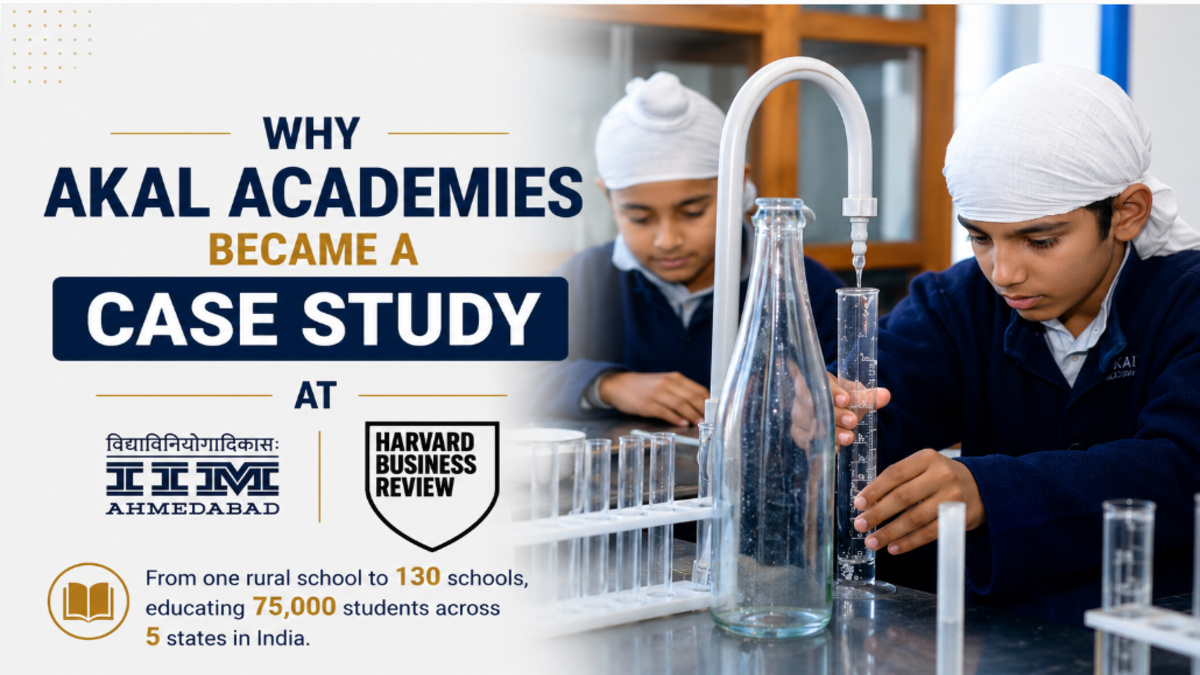
According to the Educate To Save Impact Report, more than 75,000 students are enrolled across 130 rural schools, while 33,906 children receive free or subsidised education.
The wider school network reaches 6,450 villages across 33 districts in five states of North India.
The figures provide a sense of scale, but they also show why rural education requires sustained effort.
The need is not concentrated in one community or one location. It extends across large rural populations where household income can influence whether a child continues education.
From 18,494 to 33,906 children receiving support
One of the clearest indicators in the five-year data is the growth in the number of children receiving free or subsidised education.
The reported figure increased from 18,494 children in 2021 to 33,906 in 2026. The 2026 figure is confirmed, while the report identifies some earlier figures as indicative pending final audit.
That distinction is important.
Impact reporting is most useful when numbers have context. A credible report should tell readers what a figure represents, the period it covers and whether it is final or subject to verification.
For organisations working in the social sector, transparency around measurement is part of accountability.
Child sponsorship as a bridge to educational continuity
Edcuatetosave.com uses child sponsorship to help address financial barriers faced by children from economically disadvantaged families.
The programme currently records 8,015 sponsored children and 4,044 sponsors, with sponsors represented across 24 countries since inception.
The report also shows 2,100 children available for sponsorship for 2026–27.
Behind each figure is a decision by a family to continue a child's education and a decision by a donor to support that opportunity.
This is where sponsorship connects philanthropy with continuity.
A contribution does not create the impact by itself. The impact comes through the educational system around the child: the school, teachers, family, community and the sustained opportunity to learn.
What academic outcomes tell us
Access to school is essential, but access alone does not tell the complete story.
The 2026 CBSE results documented in the report provide another perspective.
For Class 10, 4,287 students appeared for the examinations, with a reported 100% pass rate. The report records 37 students scoring above 97%, 188 scoring 95% or above, and 635 scoring 90% or above.
At Class 12 level, 2,866 students appeared, also with a reported 100% pass rate. The report highlights students who achieved high academic rankings, including students who ranked among the top performers nationally.
These outcomes matter because they show what can happen when rural students have access to sustained educational support.
A student's location should not determine the quality of education available to them.
The individual behind the statistic
Statistics become easier to understand when we connect them to individual experiences.
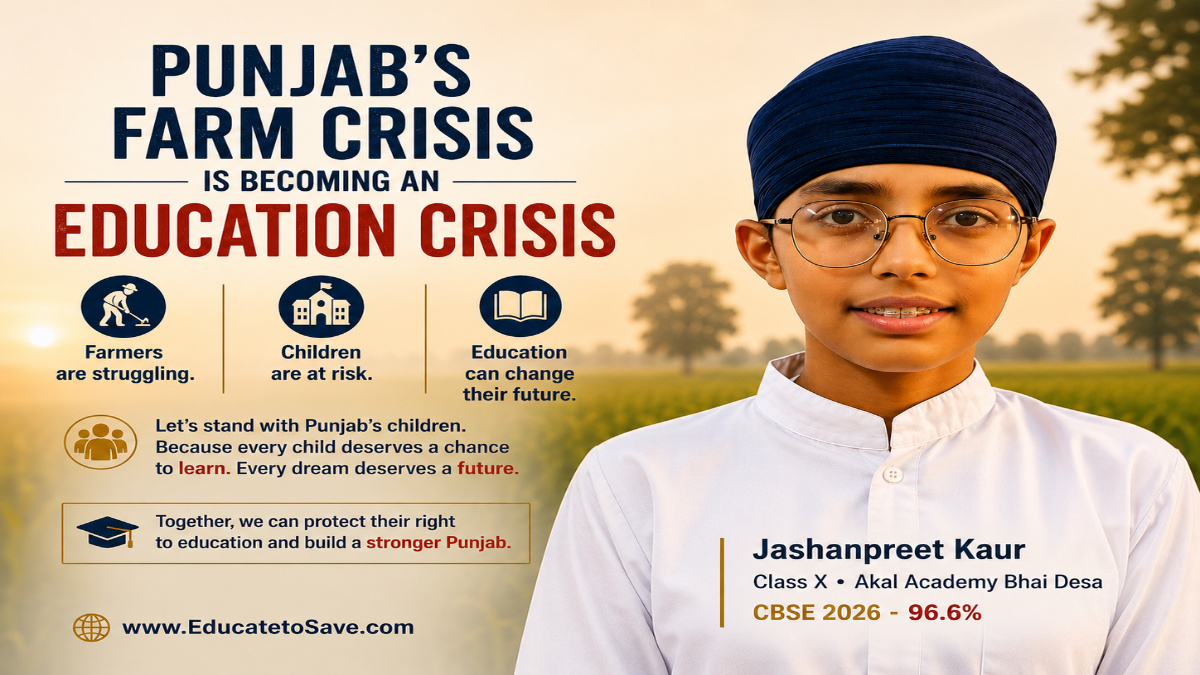
The report includes the story of Jashandeep Kaur, whose father works as a travelling salesman. She achieved 98.4% and an All India Rank of 4 in the CBSE Class XII medical stream, according to the report.
Another story is that of Sifat, a student raised by her mother on a single income. She scored 90.4% in her Class 10 board examinations.
These stories should not be treated as proof that education alone determines an individual's future.
They demonstrate something more specific.
When financial circumstances threaten a child's education, sustained support can keep an educational pathway open.
What the child does with that opportunity is their achievement.
Why measurement matters in philanthropy
There is a growing expectation that philanthropic organisations should demonstrate measurable outcomes.
That is a healthy development.
Donors, CSR teams and communities need to understand where resources go and what they help make possible.
But impact measurement should also recognise that education is not an immediate intervention.
A school year is one unit of time. A child's educational journey can span fifteen years or more.
Some outcomes are visible quickly. Others take years.
A useful education impact report therefore needs to look beyond a single annual number and consider changes in access, participation and academic progression over time.
It also needs to acknowledge what the numbers do not yet tell us.
For example, examination results provide evidence of academic achievement. They do not, on their own, measure confidence, employment, family income, social mobility or the long-term contribution of an educated child to their community.
Those outcomes require longer-term tracking.
Rural education is also about community change
A school can affect more than the child sitting inside its classroom.
When children remain in education, families may begin to see schooling differently. Girls may have greater opportunities to continue their studies. Parents may develop stronger expectations for their children's education.
Over time, these changes can influence communities.
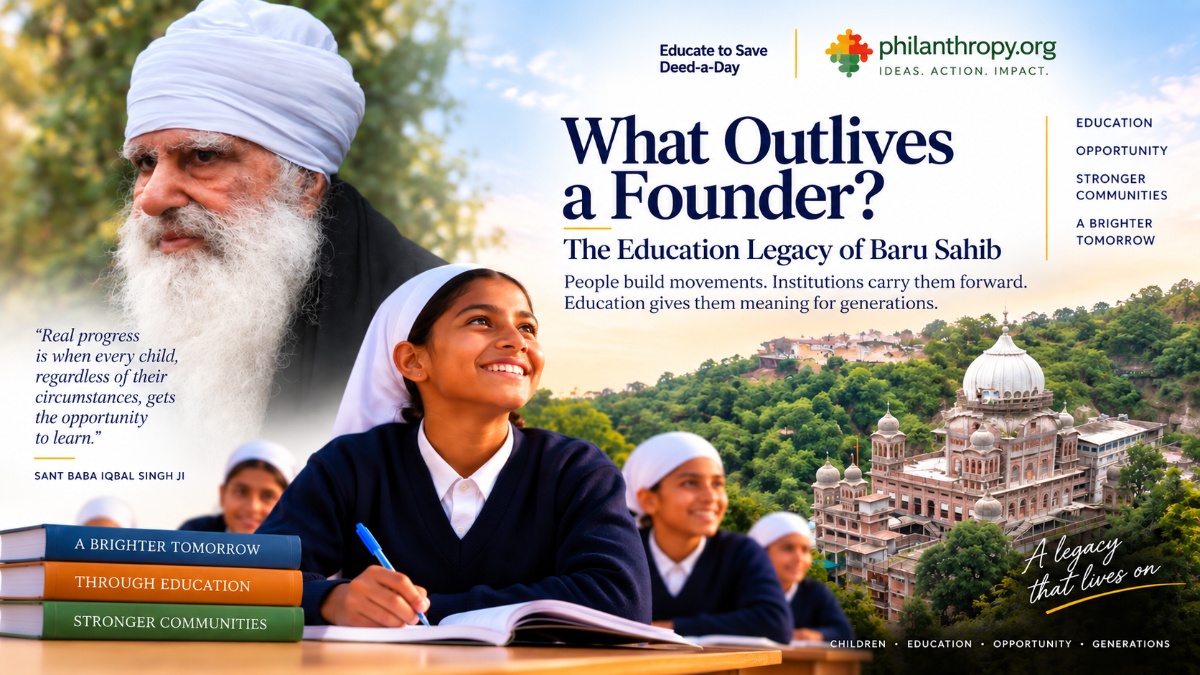
The Kalgidhar Society's rural education network has developed over decades. What began with a single classroom in 1986 has grown into a network of 130 rural schools, alongside universities and other educational and social programmes.
This long institutional history provides an important perspective.
Educational change rarely happens through a single campaign.
It depends on institutions that can continue serving communities year after year.
What should the next decade measure?
Educate To Save has set a goal of providing quality, values-based education to 100,000 underprivileged children over the next decade.
As the programme grows, the definition of impact should grow with it.
Reach will remain important.
But future measurement can go further by asking:
How many children stay in school?
How many complete secondary education?
How many enter higher education or vocational pathways?
What happens to sponsored children several years after they leave school?
How does education affect their families and communities?
These questions can help move the conversation from inputs and outputs towards longer-term outcomes.
Education as a long-term investment
The value of education cannot always be captured in a single annual figure.
A scholarship may prevent a child from leaving school today.
A school may give a rural family access to educational opportunities that were previously unavailable.
A board examination result may open the door to university.
A university education may eventually lead to employment, entrepreneurship or leadership.
The impact can continue long after the original contribution has been made.
That is why rural education deserves to be viewed as a long-term investment in human potential.
Five years of data, and a much longer journey
The Educate To Save Impact Report 2021–2026 captures one stage of a much longer journey.
Its numbers show the scale of the programme. Its student stories show what those numbers represent. Its academic results provide evidence of educational outcomes. Its next-decade goal points towards the work that remains.
The most useful question is therefore not simply:
How many children have been helped?
It is:
What opportunities become possible when a child is able to stay in school?
For rural children across India, that question can shape the course of an entire life.
And sometimes, the impact of educating one child extends far beyond that child.
Read the full Educate To Save Five-Year Impact Report (2021–2026):
https://educatetosave.com/impact-report
About the data:
The figures in this article are drawn from the Educate To Save Five-Year Impact Report 2021–2026, based on programme and sponsorship records maintained by The Kalgidhar Society, Baru Sahib. Where the Impact Report identifies figures as indicative or subject to final audit, they should be understood accordingly. Academic results are based on CBSE examination results reported for the 2025–26 academic year.