What Outlives a Founder? The Education Legacy of Baru Sahib
An editorial on rural education, institutional continuity and the philanthropic idea of building something that lasts
A founder can begin a movement with an idea. But an idea becomes a legacy only when it continues to serve people after the founder is gone.
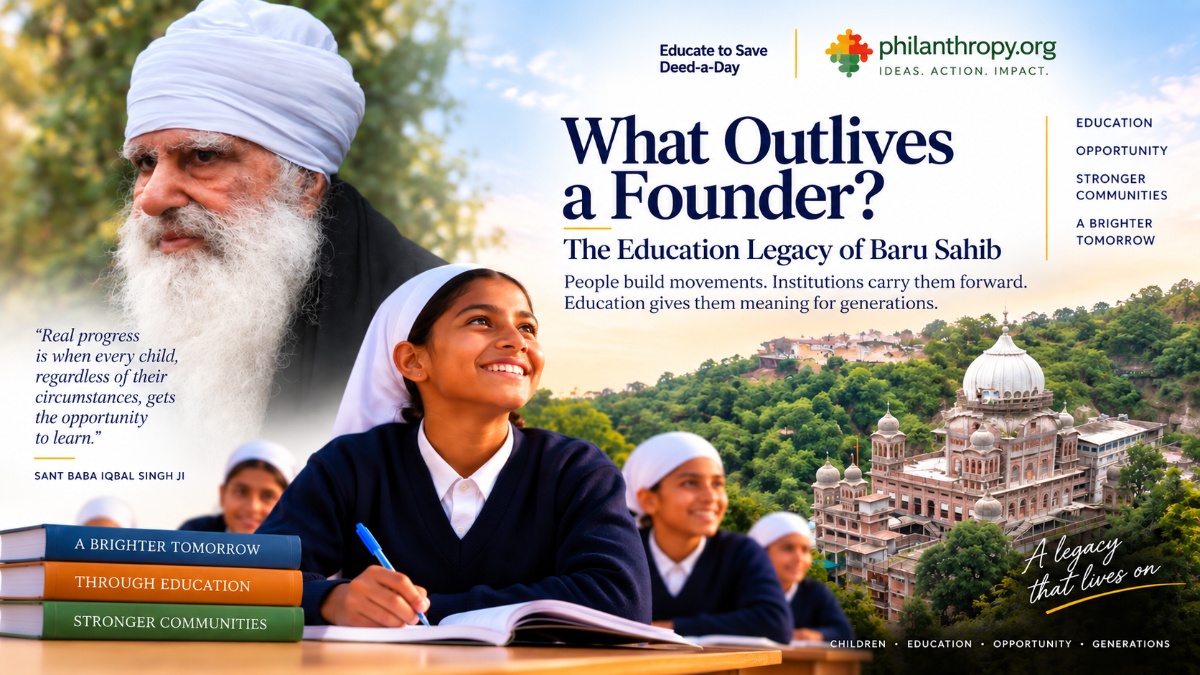
This question sits at the heart of the story of Baru Sahib, a rural educational and philanthropic movement that began with the vision of Sant Baba Iqbal Singh Ji.
His belief was straightforward but ambitious: children in rural communities should not have to leave their villages to access meaningful educational opportunities.
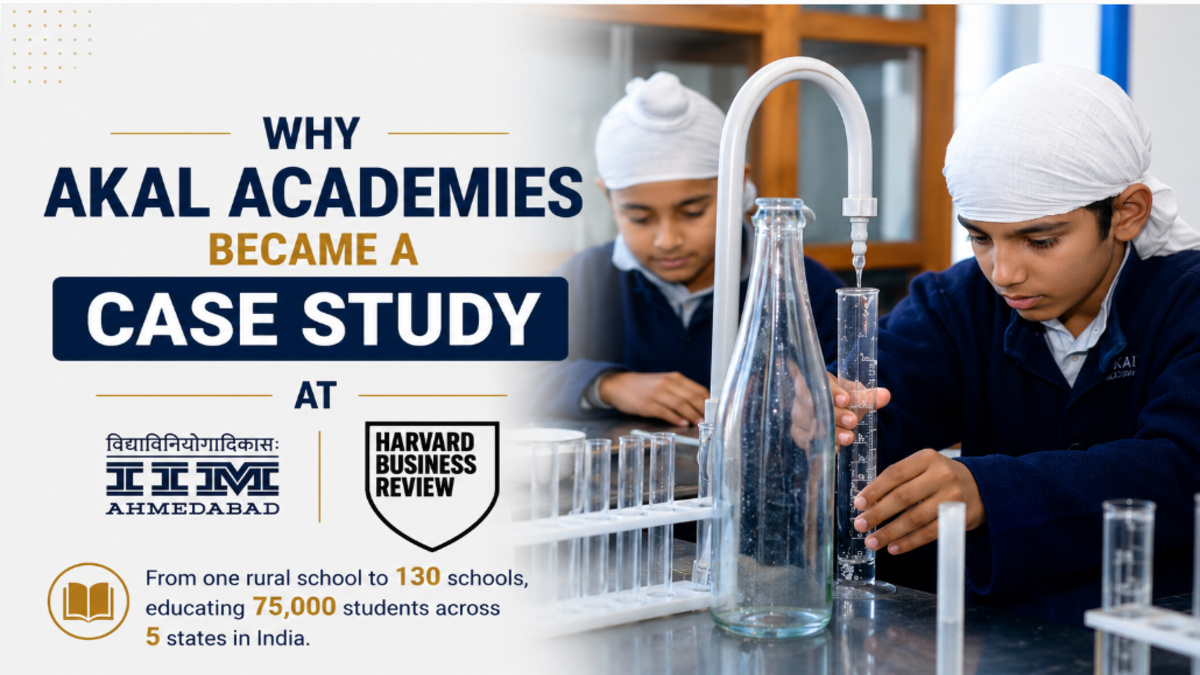
Decades later, that idea has grown into a wider educational ecosystem. The Kalgidhar Society operates 130 rural schools across five northern states, with more than 75,000 students in its education network.
The scale is significant. The more interesting story, however, is what happened to the original vision.
It continued.
And that is why Baru Sahib offers a useful lesson in philanthropy: lasting social change depends on building institutions that can carry a mission forward across generations.
What happens when the founder is no longer there?
This is an important question for philanthropy.
Many social initiatives begin because an individual sees a problem and decides to act. The founder brings conviction, energy and personal credibility. But long-term impact requires something more.
It requires an institution capable of continuing the work.
It requires people who understand the mission and can carry it forward. It requires systems that allow programmes to operate year after year. It requires donors who see their contribution as an investment in a continuing mission rather than a one-time transaction.
This is the distinction between a project and an institution.
A project may address a problem for a defined period.
An institution can continue addressing that problem across generations.
The story of Baru Sahib sits within this larger question of institutional philanthropy.
Philanthropy.org recently explored this theme in its feature, “What Outlives the Founder: A Lesson in Legacy-Driven Giving from Rural Punjab.” The article examines the story of Baru Sahib and considers how a philanthropic vision can develop into an enduring institutional mission.
The idea that started in rural Punjab
Sant Baba Iqbal Singh Ji devoted his life to education and rural development.
The educational work associated with Baru Sahib grew from a belief that rural children deserved access to quality education, even when their families had limited financial resources.
That principle shaped the development of the Akal Academy network.
Today, Akal Academies serve children across rural communities in Punjab, Haryana, Uttar Pradesh, Rajasthan and Himachal Pradesh.
The schools are part of a broader institutional effort led by The Kalgidhar Society.
This matters because rural education is not simply a question of building schools.
A school needs teachers. Children need sustained support. Families need confidence in the value of education. Institutions need the capacity to maintain educational standards over time.
The real challenge is not only getting a child into a classroom.
It is helping that child remain there long enough for education to change the trajectory of their life.
Education is a long-term form of philanthropy
A donation to education can look small when measured against the scale of a social problem.
Its effect on an individual child can be much larger.
A year of education can help a child remain in school.
Several years can determine whether that child completes secondary education.
Completion can influence access to higher education, skills and employment.
The effects can continue into the next generation.
This is why child sponsorship is different from a short-term relief intervention. It is a commitment to continuity.
Through EducateToSave, donors support children studying within the rural education network of The Kalgidhar Society. Donor and scholarship support helps children from financially disadvantaged families continue their education.
Currently, 33,906 students receive free or subsidised education through donor and scholarship support.
Behind that number are individual children with different circumstances, aspirations and potential.
The purpose of sponsorship is to make sure financial hardship does not become the reason a child has to leave school.
Why institutional continuity matters to donors
A donor naturally wants to know what their contribution will achieve.
For education philanthropy, another question deserves equal attention:
Who will continue doing the work tomorrow?
An established institution can provide a degree of continuity that an isolated project cannot.
It can retain teachers and institutional knowledge. It can develop educational infrastructure. It can work with communities over many years. It can create mechanisms for scholarships and sustained support.
This does not mean that institutions should be judged only by their size or history.
Longevity alone is not evidence of impact.
But longevity combined with a clearly defined mission, established programmes, measurable reach and continued leadership can provide an important foundation for long-term philanthropic work.
That is one reason the Baru Sahib experience is relevant to today's conversation about social impact.
A legacy is not a monument
The word "legacy" can easily become associated with buildings, awards or historical milestones.
For a social mission, legacy can mean something much more practical.
It can mean a child attending school today because an institution exists to support that child.
It can mean a teacher entering a classroom in a rural community.
It can mean a family believing that their daughter's education is worth investing in.
It can mean a student from a village eventually entering higher education.
The strongest evidence of a founder's legacy may therefore be found not in what bears the founder's name, but in what continues because of the values the founder established.
At Baru Sahib, that legacy is visible through the continuing educational work of The Kalgidhar Society.
From one generation to the next
The passing of a founder creates a test for every mission-driven organisation.
Can the institution preserve the purpose without becoming dependent on one individual?
Can new leaders take responsibility while remaining connected to the founding vision?
Can donors continue to trust the organisation?
Can the organisation adapt to changing educational needs without losing its core purpose?
These are not questions unique to Baru Sahib. They are questions for philanthropy everywhere.
The continuation of Baru Sahib's educational mission under subsequent leadership, including Dr. Davinder Singh Ji, demonstrates the importance of institutional stewardship in sustaining a founder's vision.
The mission is no longer dependent on one person's daily presence.
It has become part of an institutional framework that continues to educate children and develop educational opportunities in rural India.
What can the Baru Sahib story teach us about education philanthropy?
Perhaps the most important lesson is that impact should be considered across time, not only across transactions.
A donor gives today.
A child studies today.
But the value of that education may appear years later.
A student may become a teacher, professional, entrepreneur or community leader. The benefits can reach a family and eventually a wider community.
That is why education is often described as a multiplier of opportunity.
It does not guarantee a particular outcome for every child. It creates the conditions in which more possibilities become available.
The responsibility of an education-focused institution is to create those conditions and sustain them.
The responsibility of a donor is to help make that continuity possible.
Why EducateToSave exists
EducateToSave is built around a simple proposition:
Every child deserves the opportunity to continue their education, regardless of their family's financial circumstances.
The initiative connects donors with children who need financial support to continue their education within the Akal Academy network.
For donors, this creates a direct connection between philanthropy and a child's educational journey.
For children, it can mean something even more fundamental: the opportunity to stay in school.
And for an institution such as The Kalgidhar Society, continued donor support helps sustain a wider educational mission that has been built over decades.
The real measure of legacy
The story of Baru Sahib began with a vision.
The vision became a school.
The school became a network.
The network became an institution.
And the institution continues to serve children who were not yet born when the original vision was conceived.
That may be the clearest meaning of a philanthropic legacy.
Not that the founder is remembered.
But that the work continues.
Not that one generation benefited.
But that another generation gets the same opportunity.
Not that a mission once existed.
But that it remains relevant to a child sitting in a classroom today.
For EducateToSave, this is ultimately what child sponsorship is about.
Supporting education today so that opportunity can continue into tomorrow.
Frequently Asked Questions
Who founded the Baru Sahib educational mission?
The educational mission at Baru Sahib is rooted in the vision and work of Sant Baba Iqbal Singh Ji, who dedicated his life to rural education and community development.
What is the connection between Baru Sahib and The Kalgidhar Society?
The Kalgidhar Society is the institution associated with the educational and social mission developed at Baru Sahib. Its work includes the network of Akal Academies and other educational and social initiatives.
How many Akal Academies are there?
The Kalgidhar Society operates 130 rural schools across five northern states of India.
How does EducateToSave support children?
EducateToSave enables donors to support the education of children who need financial assistance to continue their schooling within the Akal Academy network.
Why is institutional continuity important in philanthropy?
Institutional continuity allows a social mission to continue beyond the involvement of its founder. It can provide the organisational structure, people and systems required to sustain programmes over many years.
Where can I read about the legacy of Baru Sahib?
The history and educational mission of Baru Sahib are documented through the official websites of The Kalgidhar Society and EducateToSave. The story has also been explored externally by Philanthropy.org in its feature on legacy-driven giving and rural Punjab.
A child's education is a legacy in progress
The next chapter of this story is being written by children in classrooms across rural India.
Some will become teachers.
Some will pursue higher education.
Some will return to their communities.
Their journeys will be different.
But every journey begins with the opportunity to learn.
You can help keep that opportunity open.